Customer: Minor, Weir and Willis Ltd.
Industry: Fresh Produce – Avocados
Location: Birmingham, UK
Solution: Ravenwood Nobac 5000 Linerless Labelling System
Printing: ProPrint Group and Reflex Group
Introduction
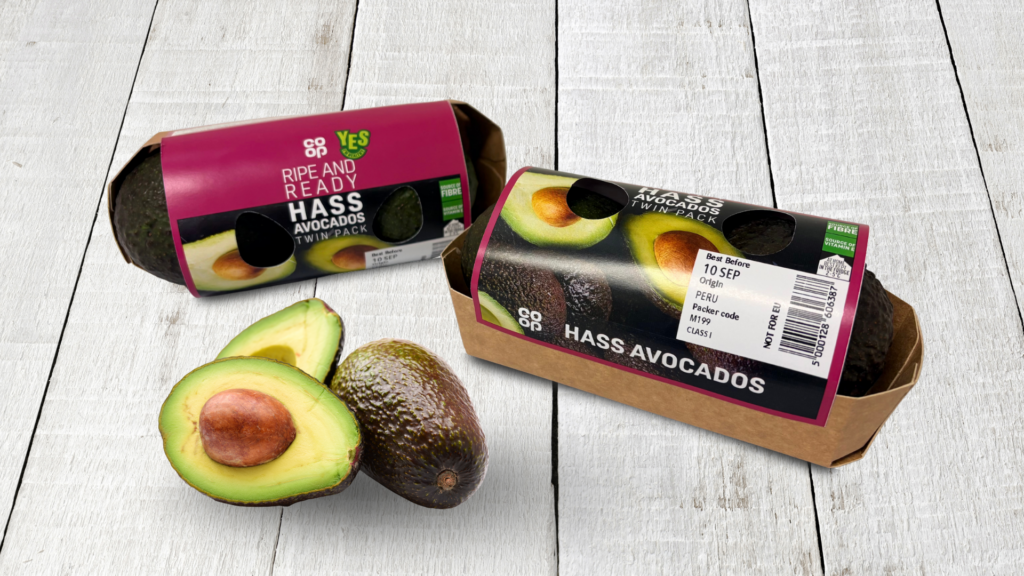
A leading fresh produce business has transformed the presentation of its Twin Pack Ready to Eat Avocados, replacing pre-printed flow wrap with sustainable linerless labelling (fruit lid) applied using Ravenwood’s Nobac 5000L.
The move was driven by a desire to innovate around packaging design, reduce plastic and packaging waste, and support a customer strategy focused on moving towards more sustainable packaging.
While the project was not designed as a cost-saving or speed-led initiative, the new format has delivered strong shelf impact and consumer response, with significant sales growth reported since launch.
The Challenge
The previous Twin Pack Ready to Eat Avocados format used pre-printed flow wrap. While the packaging performed well from a production perspective, it was not recyclable, creating an opportunity to develop a more sustainable alternative.
The business was looking for a new packaging solution that could support its customers’ sustainability ambitions while also refreshing the range and creating greater impact on shelf.
The challenge was to develop a format that could deliver across several priorities – sustainability, design, consumer appeal and commercial performance, without compromising the quality and presentation of the product.
Why Linerless?
The decision to move to a linerless fruit lid was driven by a combination of factors, including packaging cost, design flexibility, recyclability, machine compatibility and the potential to reduce the pack’s carbon footprint.
The new format offered an opportunity to do more than simply replace the existing packaging. It provided greater freedom to enhance the product presentation, communicate the product’s benefits and create a fresh, distinctive look designed to stand out on shelf.
Reducing plastic use and packaging waste was a specific objective, alongside reducing the overall carbon footprint of the packaging.
The wider ambition was clear: freshen the range, grow the category, enhance the product and wow the consumer – while supporting the customer’s sustainability strategy.
The Development Process
From initial concept to production, the project took approximately six months.
A key part of the development process was selecting the right combination of machine and packaging partners to meet the project’s objectives. This included developing suitable label designs, conducting transit trials and working towards an acceptable cost point.
The project also required close collaboration across technical, operational and commercial teams, while ensuring the final solution met customer requirements.
The result was a linerless fruit lid designed specifically for the Twin Pack Ready to Eat Avocado format and applied using Ravenwood’s Nobac 5000L.
The Solution
The new packaging format combines a recyclable linerless fruit lid with the existing Twin Pack avocado format, replacing the previous pre-printed flow wrap.
Nobac 5000L (fresh produce linerless applicator)
Ravenwood’s Nobac 5000L provides automated linerless label application, enabling the new fruit lid format to be applied efficiently as part of the production process.
The system is currently in its ramp-up phase, with production performance continuing to be optimised as volumes increase.
A second machine was also purchased to roll out the format across additional products and accommodate the growing volume being converted to linerless.
Linerless Fruit Lid
The linerless format provides greater flexibility for packaging design while eliminating the backing liner associated with conventional pressure-sensitive labels.
For this project, the focus was on reducing plastic and packaging waste while creating a more impactful presentation for the product.
The fruit lid printing was carried out by UK-approved linerless printers, ProPrint Group and Reflex Group.
Production & Performance
The project was not primarily driven by production speed. Instead, sustainability, brand presentation and shelf impact were the key performance objectives.
As the new format continues through its ramp-up phase, the team is pleased with progress and comfortable with the production speeds being achieved.
As with any new format, reel changes are currently more frequent during ramp-up, with the production team continuing to optimise the process as the operation scales.
Rather than focusing on speed as the primary KPI, the project has been judged on its ability to deliver against the wider commercial and sustainability objectives – and those results have been highly encouraging.
Sustainability
The move from pre-printed flow wrap to the new linerless fruit lid has resulted in a clear reduction in plastic use and packaging waste.
While detailed environmental data is not yet available, the reduction in plastic is evident and was a key driver behind the project.
The new format also supports the customer’s wider sustainability strategy, with reducing packaging waste and carbon footprint identified as important objectives from the outset.
Retailer & Consumer Response
The response to the new presentation has been extremely positive.
Retailers have welcomed the format because it delivers strong shelf standout while aligning with their sustainability ambitions, making the proposition easier to communicate and support.
Consumers have also responded positively to the new presentation, with shoppers commenting on how different the pack feels and looks.
Most importantly, that positive response has translated into stronger sell-through and a significant uplift in sales versus the previous base.
The exact sales increase remains commercially confidential, but the business describes it as one of the strongest trends seen across the range.
The Commercial Story
This was not a cost-saving project.
The new format represents a higher upfront investment, with the business choosing to prioritise sustainability, product presentation and consumer appeal over reducing the immediate cost of packaging.
That investment has been justified by the commercial response, with significant sales growth since launch demonstrating the value of combining packaging innovation with strong shelf impact.
The project has also demonstrated what linerless can offer beyond packaging efficiency – providing a platform for genuine innovation in design and presentation.
What’s Next?
The Twin Pack Ready to Eat Avocado is just the beginning.
Following the success of the new format, the business is now rolling out linerless across a wider range of fresh produce, including:
- Avocado
- Passion fruit
- Mango
- Sharon fruit
Top fruit will follow in the coming weeks.
The move represents a wider shift towards linerless packaging rather than a one-off pilot, with the business continuing to explore how the technology can support sustainability, product differentiation and category growth across its fresh produce range.
Conclusion
By replacing non-recyclable flow wrap with a linerless fruit lid, the business has created a more sustainable and visually distinctive format for its Twin Pack Ready to Eat Avocados.
The project demonstrates that packaging innovation does not have to be driven solely by cost or production efficiency. By prioritising sustainability, shelf impact and consumer appeal, the new format has delivered a strong commercial response and significant sales growth.
With linerless now being rolled out across a growing range of fresh produce, the project marks the beginning of a much wider packaging transformation.
For further information, contact Ravenwood’s marketing team on +44(0)1284 749144.